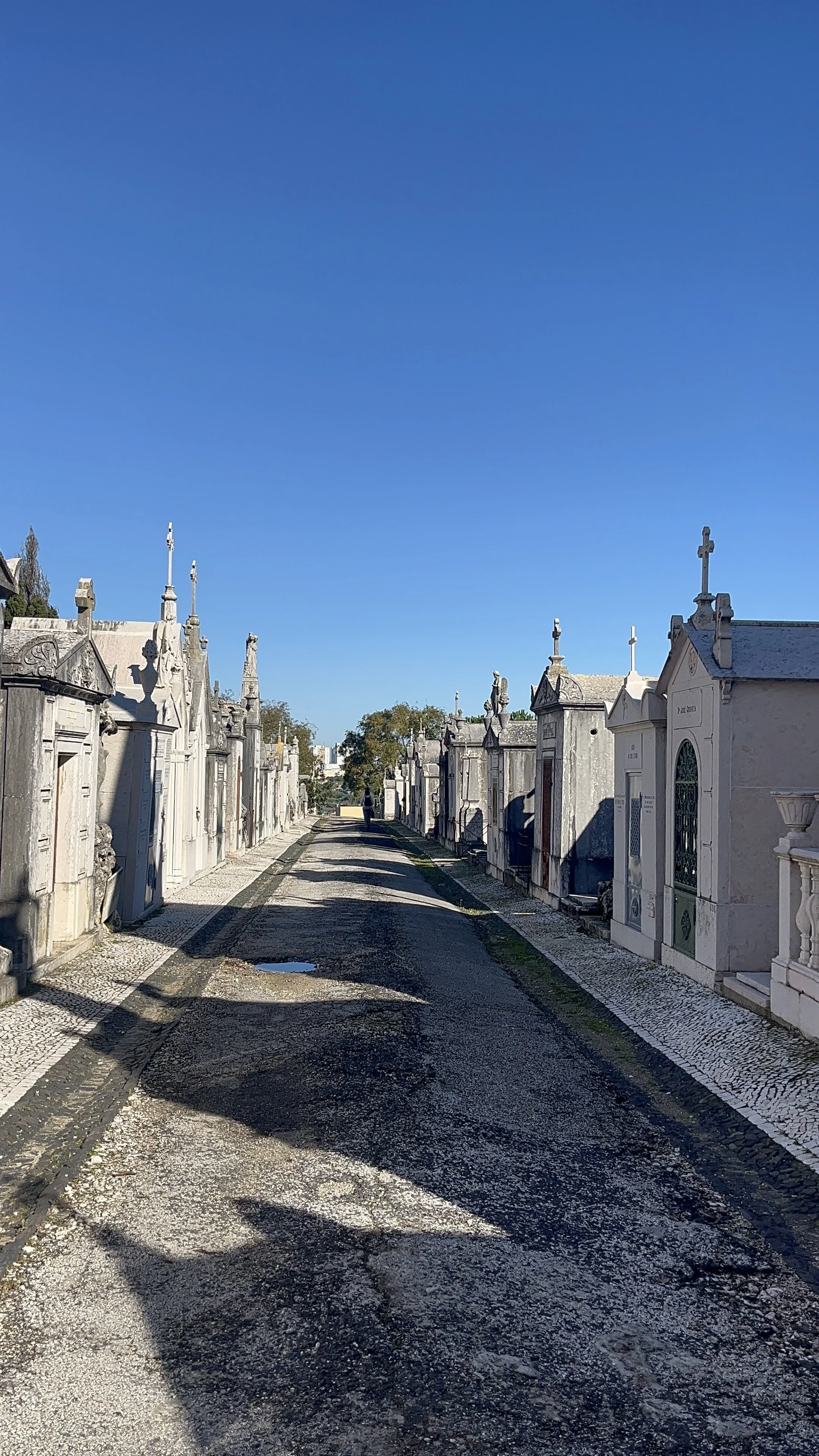
Where are your dead?
When I was living in Berlin, around my neighborhood there were 3 cemeteries. I took many walk through those cemeteries, especially on the way to kindergarten with my daughter. It was mostly there, around thee cemetery, that I would see hearses entering for funerals. Coffins inside. Silence and slow movement.
The first two years, it felt familiar enough that I did not think much about it. But slowly, something started feeling strange to me. I realized that whenever I was in the city center, in crowded streets, in cool upper class neighborhoods, I never saw hearses. Not once in six years. I only saw them near funerary homes, cemeteries, crematoriums, almost as though death itself had been geographically contained. Hidden in designated areas of the city. And that, started feeling deeply unfamiliar.
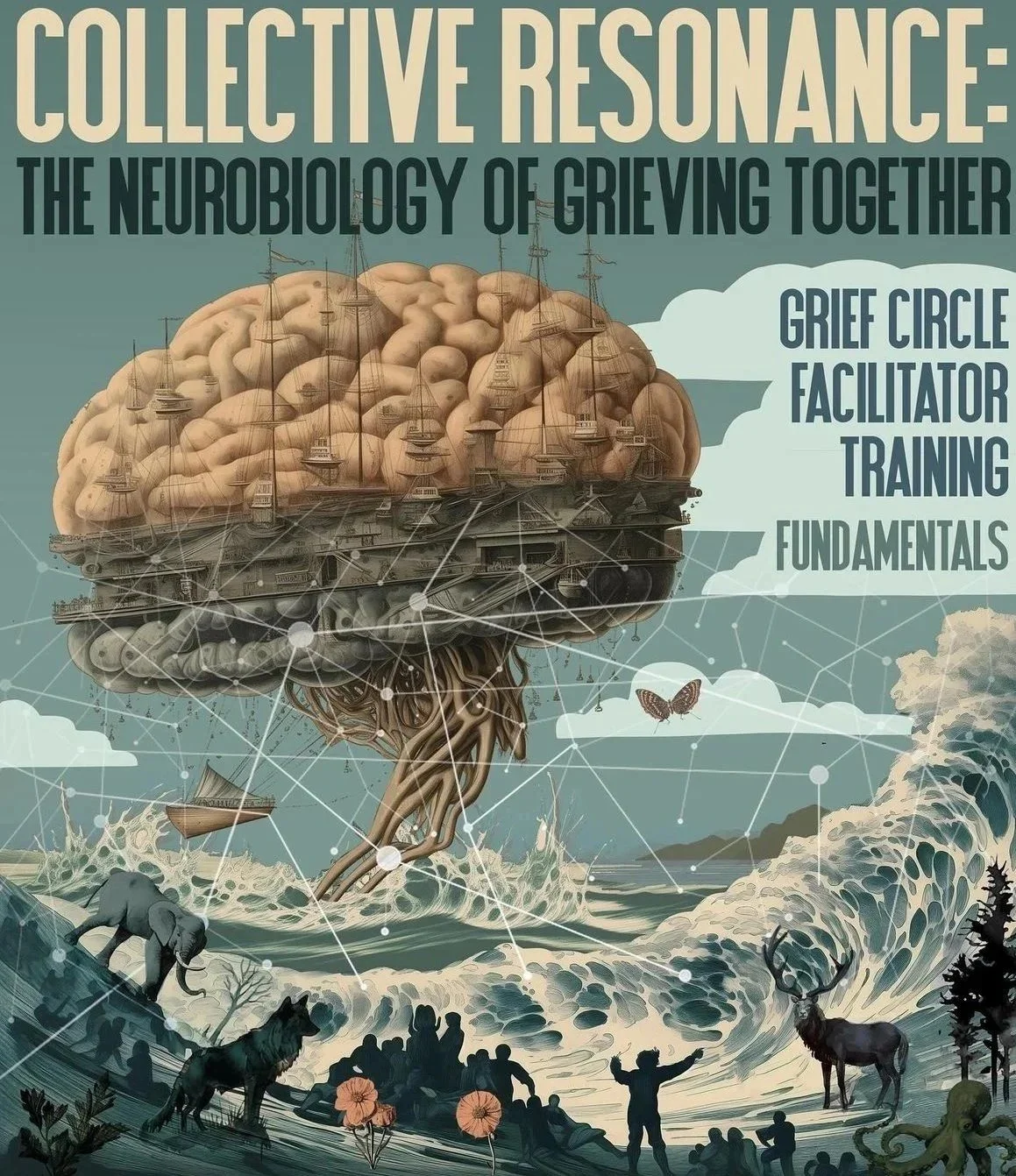
Strengthening Belief: What My First Grief Cohort taught me
Completing the journey of teaching my first cohort of grief facilitators was a deeply transformative experience for me as a teacher. While I believe it moved the trainees as well, I won’t speak for them, I’ll let them share for themselves what this experience has meant and done for them. When I developed this program, I was driven by the desire to bring forward a model of grief facilitation that moves beyond the dominant Eurocentric framework and beyond grief tied solely to human loss and death. I envisioned a model that encompasses the grief felt in systemic loss, honoring deeper, more holistic ways of holding space for grief.

Honing the Art of Mending: A Vital Aspect of Parenthood
When my eldest child was about 3 years old, a minor conflict triggered something profound within me. It was a moment that illuminated a deeper truth: the role of a parent is far more than just providing care; it's also about mastering the art of mending.
Imagine the scene: a typical day in the life of a parent. My child's innocent curiosity collided with my own expectations, resulting in a minor disagreement. Yet, in that seemingly insignificant moment, I felt a surge of emotions an awakening to the complexities of parenthood.

We can't be "regulated" in dysregulated systems
Let’s first start by defining what “regulation” is.
Regulation. /ˌrɛɡjʊˈleɪʃn/ - noun
Classical definition: Rules made by a government or other authority in order to control the way something is done or the way people behave.
Biological definition: Biological regulation is what allows an organism to handle the effects of a perturbation, modulating its own constitutive dynamics in response to particular changes in internal and external conditions.

It takes a village to raise a child, but what if the village is traumatized?
"IT TAKES A VILLAGE TO RAISE A CHILD". I'm sure you've heard this African saying at least once in your life. If here, in the diaspora and in the West in general, this sentence seems to mean solidarity, generosity and community care, if you grew up in Benin, in my generation, believe me, this saying will land differently in you.
To be quite honest, I hadn't really thought about or even referred to this saying in the past before I became a first-time mum in 2014. And then, as if by magic, even if I wanted to or not, this sentence suddenly woke up in me, not only in my thoughts but also in my flesh.

Honoring the land, finding belonging
In January 2014, I moved to Germany, to Berlin to be precise. In the same year, I also gave birth to my first daughter and my mother came to visit me from Benin to help me with the newborn.
I remember going to the airport to welcome her and bring her to our flat. When she arrived, dropped off her luggage and hugged my partner and baby, the first thing she asked me to do was to give her some water and show her my balcony. So, I did, and there, on the balcony, she took off her shoes, got down on her knees, said a little prayer and poured a few drops of water on the ground.

There are no bad parents, only broken systems…
Yesterday, 9 years ago, I had the immense joy of holding my little one in my arms for the very first time. I became a parent, a mother.
Every day was and still is a pure beauty, a discovery, an adventure, and lessons ....
But it was also hard. I am not the kind of person who will tell you that motherhood is beautiful, that everything is fine, that I use my feminine and ancestral intuition and blah blah blah.... NOPE!!!
For the first two years I remember being so angry because I was confronted with what it is really like to be a parent, to be a black parent in Europe, to be an African parent without a community, a healthy community to lean on.... I have been confronted with lies that nobody talks about as a parent, as a mother.
No, it's not easy and always as beautiful as seen on Instagram. I was thinking that as a visual artist at the time, I could keep working, taking my baby everywhere, going on residencies and making my art, etc.... No, darling only a few artist parents experience this and most of the time they are systemically privileged and I wasn't and still am not.

When women are witches and men are healers
My mum is called a “witch”. Witch is how our patriarchal societies call women who are fearless and deeply connected to their womb. Yes, she is a witch, but she hates being called like this. She rejected everything that could confirm that she is a witch. But she is a witch, just like her mom, her grand-mothers, and all women of her lineage.